



Panama: Panama City and Portobelo
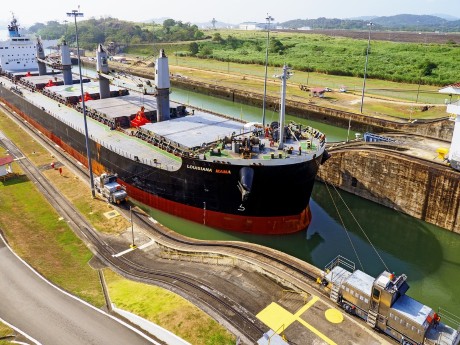
This trip takes you to Panama Canal, one of the Seven Wonders of the World and UNESCO World Heritage Site of Portobelo. Panama City is a modern city framed by the Pacific Ocean and the Canal with its Miraflores Locks, which offer views of ships traversing the canal, an essential shipping route linking the Atlantic and Pacific.
Read more
This trip takes you to Panama Canal, one of the Seven Wonders of the World and UNESCO World Heritage Site of Portobelo. Panama City is a modern city framed by the Pacific Ocean and the Canal with its Miraflores Locks, which offer views of ships traversing the canal, an essential shipping route linking the Atlantic and Pacific. Panama's historic district, the Casco Viejo, is famed for its cobblestones and colonial-era landmarks like the neoclassical Palacio Presidencial and bougainvillea-filled plazas lined with cafes and bars, all making a visit to Panama worth your time and money, discovering the local history, culture and food. A short drive to Portobelo will complete your trip with this beautiful port with a deep blue sea and white beaches, where you can swim, deep dive or snorkel right next to historical sites. Here you will be thrilled learn about the "diablitos" and the Queen Congo dance. Fun awaits you in Panama. Waterviews strives to offer accommodation options within walking distance of water and/or in an area of touristic interest. Our prices include taxes (but excludes local tourist taxes). Customize your trip to your personal preferences with optional activities (hit the “Add Activities’’) or change hotels, etc. Contact us for customization at no extra cost at: Service@waterviewstravel.com
Destinations
- Panama City
- Portobelo


Itinerary
Panama City

Panama’s cosmopolitan capital, Panama City, is the country’s vibrant economic, cultural and political hub that also serves as the gateway to its spectacular nature. Casco Viejo, the city’s historic centre, is filled with colonial-era landmarks, and by night the bustling restaurants and lively bars that line its charming streets and picturesque plazas come alive with tourists and locals alike. There are no shortage of attractions here, from a variety of museums and shops to the iconic Panama Canal.
Read more
Panama’s cosmopolitan capital, Panama City, is the country’s vibrant economic, cultural and political hub that also serves as the gateway to its spectacular nature. Casco Viejo, the city’s historic centre, is filled with colonial-era landmarks, and by night the bustling restaurants and lively bars that line its charming streets and picturesque plazas come alive with tourists and locals alike. There are no shortage of attractions here, from a variety of museums and shops to the iconic Panama Canal.
Additional Information
Panama City is a very multicultural place, with large populations from many different parts of the world. Spanish is spoken by most, and many speak some form of English. Customer service is slowly improving, and surprisingly dismal in hotels. However, on the streets, Panamanians are for the most part extremely friendly and helpful and would love to give you some advice.
There's great shopping, from high-end stores in the malls around Paitilla and in the banking district around Via España, to veritable bargains around La Central (Central Avenue, now turned into a pedestrian walkway) and the Los Pueblos outdoor mall. You can also find many ethnic stores (mostly Chinese and Indian), in certain parts of the city.
Climate
© Sourced from Wikivoyage
Portobelo

Set in the north of Panama on the country’s Caribbean coast, Portobelo boasts a long history, having once been Central America’s most important colonial Spanish port. Today, the small fishing town offers a relaxed atmosphere as well as a vibrant local culture, and in the surroundings you’ll find picturesque beaches, lush rainforest and idyllic islands that are waiting to be explored.
Read more
Set in the north of Panama on the country’s Caribbean coast, Portobelo boasts a long history, having once been Central America’s most important colonial Spanish port. Today, the small fishing town offers a relaxed atmosphere as well as a vibrant local culture, and in the surroundings you’ll find picturesque beaches, lush rainforest and idyllic islands that are waiting to be explored.
Additional Information
Portobelo was founded in 1597 by Spanish explorer Francisco Velarde y Mercado. From the sixteenth to the eighteenth centuries it was an important silver-exporting port in New Granada on the Spanish Main and one of the ports on the route of the Spanish treasure fleets.
The city was also victim of one of Captain Henry Morgan's notorious adventures. In 1668, Morgan led a fleet of privateers and 450 men against Portobelo, which, in spite of its good fortifications, he captured and plundered for 14 days, stripping it of nearly all its wealth. This daring endeavour, although successful, also proved particularly brutal as it involved rape, torture, and murder on a grand scale.
On November 21, 1739, the port was again attacked and captured by a British fleet, commanded this time by Admiral Edward Vernon during the War of Jenkins' Ear. The British victory created an outburst of popular acclaim throughout the British Empire, and many streets and settlements in the British Isles and the Thirteen Colonies were named Portobello such as the Portobello Road in London.
However, the town was quickly recovered by the Spanish and Admiral Vernon suffered a major defeat against the stronghold of Cartagena de Indias in 1741. Vernon was forced to return to England with a decimated fleet and over 18,000 casualties. Despite the Portobelo campaign, British efforts of gaining a foothold in the Spanish Main and disrupting the galleon trade were fruitless. Following the War of Jenkins' Ear, the Spanish switched from large fleets calling at few ports to small fleets trading at a wide variety of ports. They also began to travel around Cape Horn to trade on the West coast.
Today, Portobelo is a sleepy city with a population of fewer than 3,000. It has a deep natural harbor and is home to many cruising yachts. In 1980 the ruins of the fortification, along with nearby Fort San Lorenzo, were declared a World Heritage Site.
When Francis Drake died of dysentery in 1596 at sea, he was buried in a lead coffin near Portobelo bay. They're still looking for him. There are two dive centers operating here. It is also a place to book passages on boats to Colombia.
© Sourced from Wikivoyage